
Overview
About Task 52
A cross-cutting international platform within the IEA Hydrogen TCP that connects active Tasks and partner programmes to advance understanding of hydrogen-enabled pathways for the decarbonisation of iron and steelmaking.
Why hydrogen and steel?
A defining challenge for global decarbonisation
Steelmaking causes roughly 7–9% of global CO₂ emissions. Hydrogen is a proven alternative to fossil reductants — making iron and steel one of the largest future markets for hydrogen.
A proven route
Hydrogen replaces fossil reductants in direct reduced iron (DRI) and other emerging production routes.
Many dependencies
The transition depends on iron ore quality, renewable energy, hydrogen supply, infrastructure, trade and policy.
Independent evidence
It requires coordinated, transparent and independent analysis across countries and institutions.
What Task 52 does
Pools knowledge, data and analysis across countries and connected IEA Tasks into a shared evidence base.
Timeline
Project timeline & history
From an initial ExCo proposal to a formally approved Annex, Task 52 operates under the IEA Hydrogen TCP from November 2025 to December 2028. Scroll to trace the milestones.
- Development phase · 2024–2025
-
IEA H2 TCP 97th ExCo Meeting — Vienna, Austria
Guided by our Task Advisor, Dr Robert Dickinson, we presented the initial proposal for a task on hydrogen for iron and steelmaking to the IEA Hydrogen TCP Executive Committee.
-
IEA H2 TCP 98th ExCo Meeting — Buenos Aires, Argentina
Proposal refined and updated with Executive Committee feedback.
-
IEA H2 TCP 99th ExCo Meeting — Sendai, Japan
The Task formally enters its definition phase.
-
Berlin Scoping Workshop
DIW Berlin, Germany
110 participants and 60+ organisations from 19 countries co-design the Task’s structure, scope and shared priorities.
- Active Task period · Nov 2025 – Dec 2028
-
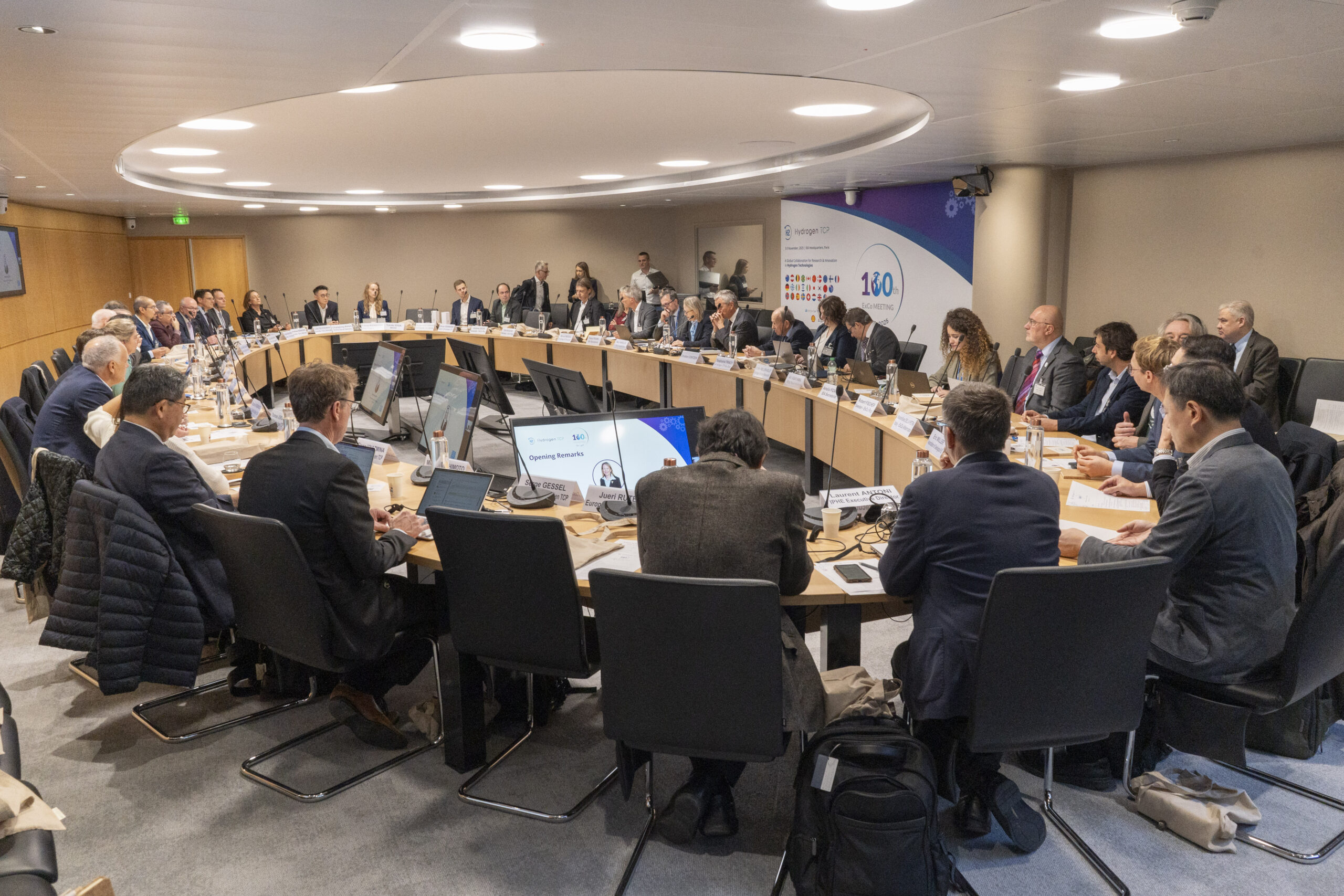
IEA H2 TCP 100th ExCo Meeting — Paris, France
The Task 52 Annex is formally approved. The three-year work programme begins.
-
COP30 Soft Launch
Australian Pavilion, Belém, Brazil
Task 52 introduced to the international community at COP30.
-
Melbourne Workshop
Monash University, Australia
Asia-Pacific industry, research and policy perspectives on hydrogen-based iron and steelmaking.
-
Oxford Workshop
University of Oxford, UK
Economic competitiveness of hydrogen-based iron and steelmaking: technology readiness, value chains, enabling projects and markets.
-
Task completion
Final Synthesising Report
Validated findings from all three Subtasks consolidated into a final report for the IEA Hydrogen TCP.








General objectives
Improving collective understanding
Task 52 works to improve the collective understanding of hydrogen-based iron and steelmaking across six interconnected dimensions.
Technology readiness
The maturity and reliability of hydrogen-based ironmaking and steelmaking technologies across the value chain.
Competitiveness
The economic position of hydrogen routes relative to incumbent fossil-based production under varying conditions.
Future scenarios
Plausible long-term trajectories for the sector and the conditions under which hydrogen routes scale.
Market outlooks
Demand, supply and trade dynamics shaping the adoption of hydrogen in iron and steel production.
System transformations
Broader energy, infrastructure and industrial changes required to enable hydrogen-based steelmaking.
Deployment pathways
Practical routes by which hydrogen-based iron and steelmaking can be deployed at scale across regions.
Specific objectives
Focused areas of work
To deliver on its mission, Task 52 pursues a set of concrete, complementary objectives.
- Assess material and energy requirements
- Assess readiness of hydrogen-based pre-reduction, direct reduction, smelting reduction and related routes
- Evaluate infrastructure and supply-chain requirements
- Examine global transformation pathways and trade
- Coordinate datasets and modelling tools
- Facilitate workshops, reports and joint publications
How Task 52 works
From evidence to a validated knowledge base
Task 52 connects literature review, expert assessment, modelling, project tracking, workshops and international collaboration into a coherent, transparent and validated knowledge base. This integrated approach ensures that findings are robust, comparable across countries, and useful to the diverse audiences the Task serves.
Governance
Relationship with the IEA Hydrogen TCP
Task 52 is carried out within the IEA Hydrogen Technology Collaboration Programme (Hydrogen TCP), one of a network of international collaborations operating under the framework of the International Energy Agency (IEA). The Hydrogen TCP functions independently of the IEA Secretariat; views, findings and publications produced by Task 52 and its participants do not necessarily reflect the views or policies of the IEA Secretariat or of individual IEA member countries.
Explore the Task in depth
Discover how the Subtasks structure our work, or get in touch to take part in Task 52.